May is Asian American Native Hawaiian Pacific Islander (AANHPI) Heritage Month, so we want to honor the lives and work of a few local AANHPI women who helped shape our region's past and continue to shape its present and future.
Ruby Chow (1979 - 1982)
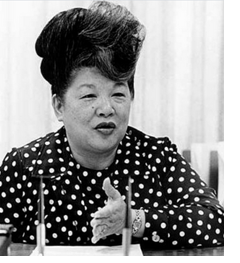 Politician, activist, and restaurant owner Ruby Chow was the first Asian American elected to the King County Council and served for three terms from 1973 -1985. She was also the first woman elected as president of the local chapter of the international Chong Wa Benevolent Association, which advocates for Chinese immigrant rights.
After the death of her father at age 16, Ruby dropped out of high school to support her family through the peak of the Great Depression. In 1948, she and her husband opened the first Chinese restaurant outside of Seattle's Chinatown neighborhood, and Ruby pushed various organizations to become more accepting of Chinese Americans, eventually persuading the Seattle School District to establish a bilingual-education program that’s still active today. She raised funds to help create the Wing Luke Museum, and she also helped Wing Luke get elected as the first person of color on the Seattle City Council by having various Chinese restaurants print "It's wise to vote for Wing Luke" in their fortune cookies.
Fumiko Hayashida (1911 - 2014)
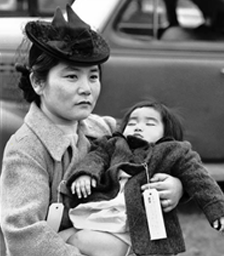 At age 31, Fumiko Hayashida was one of the first Japanese Americans forced into an internment camp following President Roosevelt's issue of Executive Order 9066 in 1942, which called for the immediate incarceration of Japanese Americans and Japanese immigrants on the West Coast after the bombing of Pearl Harbor. Fumiko and her family were given only 6 days to get their affairs in order; they weren't told how long they would face internment, and they were only allowed to bring the clothes on their back and one suitcase per family.
This photo of Fumiko and her 13-month-old daughter was taken as she waited with over 250 other Japanese Americans for the ferry that would take them from their home on Bainbridge to the internment camp, and it became an iconic representation of the struggle Japanese Americans faced in the wake of Executive Order 9066. In 2006, at age 95, Fumiko testified before a U.S. congressional committee in support of a memorial for interned Japanese Americans, a memorial which was opened on Bainbridge Island in 2011.
Valli Kalei Kanuha
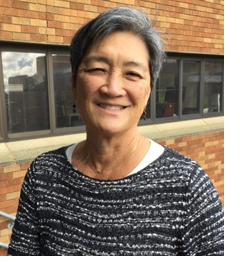 For over 45 years, activist, lesbian-feminist, and Indigenous scholar Valli (Val) Kalei Kanuha has worked as a community-based researcher, professor, and consultant lecturing on social justice issues. In 1974, Val helped create Women's Advocates, the first shelter in the country for women and children fleeing domestic violence. As the daughter of a Native Hawaiian father and Nisei mother, Val has used her cultural knowledge and academic background to design and implement alternative ways to intervene in violence against women and children. She says her transformative and restorative justice approach is based on Native Hawaiian cultural traditions and practices, and she believes that intersectionality is necessary to find solutions to gender-based violence. Val currently works as an Associate Dean for the Office of Graduate Student Success at the University of Washington.
Aki Kurose (1925 - 1998)
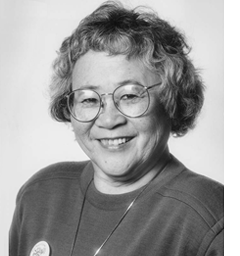 Aki Kurose was a social justice and housing advocate, anti-war pacifist, and lifelong educator. She grew up in the Central Area in a diverse neighborhood with other Japanese, Chinese, Jewish, and Black families all living together, but she and her family were uprooted during her senior year in high school by the Japanese internment. This violation of their constitutional rights left an impact on Aki Kurose, and it shaped her pacifist ideals and her commitment to social justice.
Aki joined CORE (Congress for Racial Equality) in the 1960s and lobbied for the desegregation of schools, housing, and employment discrimination, among many other issues. After discovering her passion for education and working with children, she became an elementary school teacher and curriculum consultant for the Seattle school district while continuing her efforts to desegregate schools. She taught well into her 70s, and in 1999, Aki Kurose Middle School was named after her, making it the first Seattle public school named after an Asian American woman.
Bettie Luke (1934 - 2025)
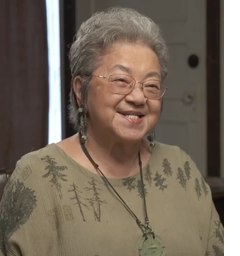 Bettie Luke—activist, educator, community leader, and sister of Wing Chong Luke—spent her life memorializing the past and educating people about the long history of anti-Chinese discrimination and violence in our region, such as the Seattle riot of 1886.
During World War II, Bettie and her family were evicted from their University District apartment due to their landlady's prejudice against Asian Americans, which is said to have inspired Wing Luke's passion for activism and civil rights, and Bettie's in turn. In addition to her work as a "community historian," Bettie organized marches in 1986 and 2011 in remembrance of the anti-Chinese expulsion acts in 1886. Alongside her sisters, Bettie helped maintain and expand the Wing Luke Museum after its creation in 1967, and she worked as the administrative director for the Greater Seattle chapter of the Organization for Chinese Americans.
Martha Nishitani (1920 - 2014)
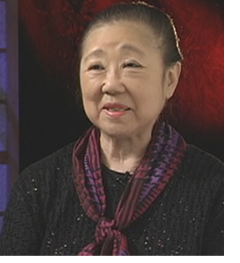 Widely referred to as Seattle's leading modern dancer in the 50s and 60s, Martha Nishitani was an award-winning modern dancer and choreographer who created the Nishitani Modern Dance Company. Martha's family was one of the few families who had something to return to after Executive Order 9066 forced them from their home, thanks to her eldest brother's wife (a white woman exempt from internment) who maintained the Oriental Gardens their family had established in 1912.
After the end of WWII, Martha returned to Seattle and joined an Intercultural Dance Workshop, which was sponsored by the YWCA. Martha opened her own dance company in Seattle in 1951 and choreographed the University of Washington's Opera Theater's productions for over a decade. In 1984, she was honored by the Northwest Asian American Theater as an Asian American Living Treasure.
Dr. Ruby Inouye Shu (1920 - 2012)
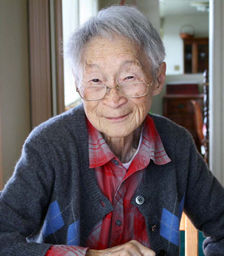 Dr. Ruby Inouye Shu was the first Japanese American woman physician in Seattle. Like many other Japanese Americans at the time, Dr. Ruby's education at the University of Washington was interrupted by Executive Order 9066, and she and her family were sent to the Minidoka internment camp in Idaho. She worked as a nurse's aide at the hospital in the camp for a year until she was released and able to finish her studies.
Dr. Ruby returned to Washington as a fully licensed M.D. in 1949 and quickly became a trusted member of the Japanese community, who typically needed an interpreter to see a doctor. She advocated for elderly Japanese patients who felt culturally isolated in nursing homes and helped open the Seattle Keiro nursing facility in 1976. Over the span of her 46 years as a doctor, Dr. Ruby delivered over 1,000 babies (including one while she herself was in labor), treated thousands of patients, and became a truly beloved pillar within her community.
Monica Sone (1919 - 2011)
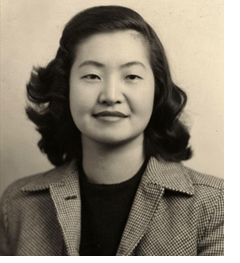 Monica Sone was a Japanese American clinical psychologist and author whose autobiographical memoir, Nisei Daughter, was one of the earliest publications that gave a firsthand account of the trauma internment camps caused. The book is cited as one of the first candid perspectives on Japanese American life on the West Coast prior to WWII, and what it was like adjusting to life after internment.
In the 1970s, Monica got involved with Seattle's Japanese American Redress Movement, which aimed to provide compensation and reparations to Japanese Americans who were forced into internment camps and often lost jobs, businesses, and homes due to this violation of their constitutional rights. In a 1978 speech at the first Day of Remembrance in Puyallup, the former location of the internment camp she stayed in, Monica said the redress movement not only served to provide compensation for victims for the camp; it was a teaching moment for America.
Velma Veloria
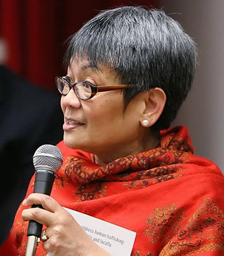 Velma Veloria was the first Asian-American woman elected to the Washington State Legislature and the first Filipina in the continental United States to be elected to a State Legislature. Prior to her time in office, Velma was an advocate against Imelda Marco's dictatorship in the Philippines and a labor activist. She came to Seattle in 1981 to help the city's unions, which were going through a major reform movement.
Only a year after being elected to the Washington House of Representatives in 1992, Velma introduced an anti-human trafficking bill, which made Washington the first state to criminalize human trafficking. After over a decade in office, Velma co-chaired the University of Washington's Anti-Human Trafficking Task Force and was a co-chair on the Filipino Community Village project, a 94 unit affordable housing building for seniors.
Learn more about the history of AANHPI Heritage Month, and stay up to date with our with our latest advocacy work with YWCA's monthly newsletter.
Ana Rodriguez-Knutsen is the Content Specialist for YWCA's Marketing & Communications team. From fiction writing to advocacy, Ana works with an intersectional mindset to uplift and amplify the voices of underrepresented communities.
We share the stories of our program participants, programs, and staff, as well as news about the agency and what’s happening in our King and Snohomish community.
