April is Sexual Assault Awareness Month (SAAM), and this year marks the 25th anniversary of SAAM. In the last two and a half decades, SAAM has served as an impactful marker that unifies survivors, direct service providers, advocates, professionals across industries, and communities.
The Facts
Washington State defines sexual assault as: "Any type of sexual contact or behavior that occurs without the consent of the recipient. Sexual assault occurs when a person is forced, coerced, or manipulated into any unwanted sexual activity. Sexual assault is never your fault." Consent is defined as: "Agreeing to engage in sexual activity, which means the individuals know and understand what is being agreed upon." (These definitions are elaborated further in Washington law RCW 9A.44.010.)
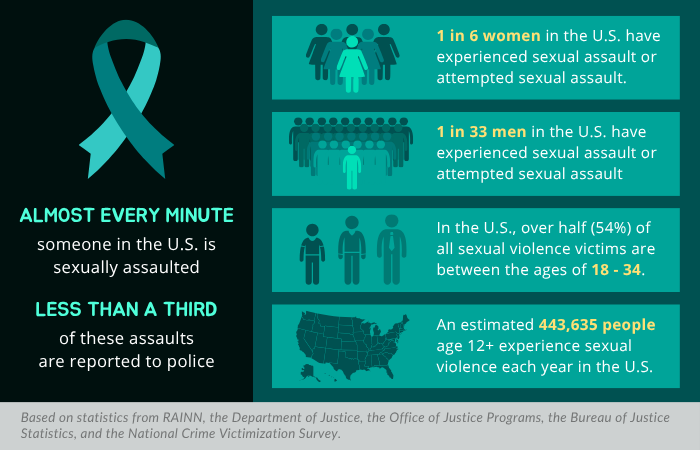
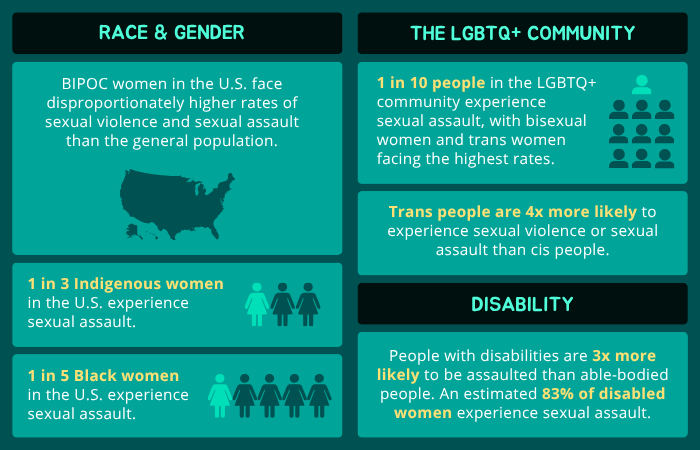
Approximately 1 in 6 women and 1 in 33 men in the U.S. experience sexual assault or attempted sexual assault in their lifetime. BIPOC women face disproportionately higher rates of sexual violence and sexual assault than the general population. This is attributed to their overlapping identities and the lasting effects of racism and sexism in our nation's past and present. Black women and Indigenous women are particularly vulnerable, with sexual assault being 2.5x more likely for a Black woman and 2x more likely for an Indigenous woman. Individuals from other historically marginalized communities also face substantially higher rates of sexual assault due to their identities, socioeconomic status, and/or lack of resources and power.
Despite these high numbers, only a third of victims report these incidents to law enforcement. This is due to several different factors, including: fear, shame, guilt, uncertainty, avoidance (in response to trauma), common misconceptions about sexual assault, and a number of other reasons, including fear of retaliation from their abuser or fear that authorities wouldn't believe them or do anything to help. This is complicated by the fact that approximately 60% of assaults are committed by someone the survivor knows (for survivors under the age of 18, this number jumps to 93%).
Recognizing the warning signs
Signs of physical abuse (bruises, cuts, black eyes, burns, etc.) are usually what people watch out for, but for some people (particularly BIPOC survivors with dark skin), even signs of physical abuse are easily overlooked. Signs of emotional and sexual abuse can be even harder to identify, and are often misattributed to some other cause, making it even harder for victims to feel like their stories and call for help will be heard and believed.
An important step in preventing sexual assault and supporting survivors, especially those who are still experiencing abuse, is learning how to recognize the warning signs of sexual, emotional, or physical abuse. Some signs include:
● Withdrawing from friends, classes, work, or social events
● Persistent sadness, fatigue, or changes in sleep or eating habits
● Signs of self-harm or suicidal thoughts
● Avoiding certain people, places, or situations
● New or increased substance use
● Unusual weight loss or gain
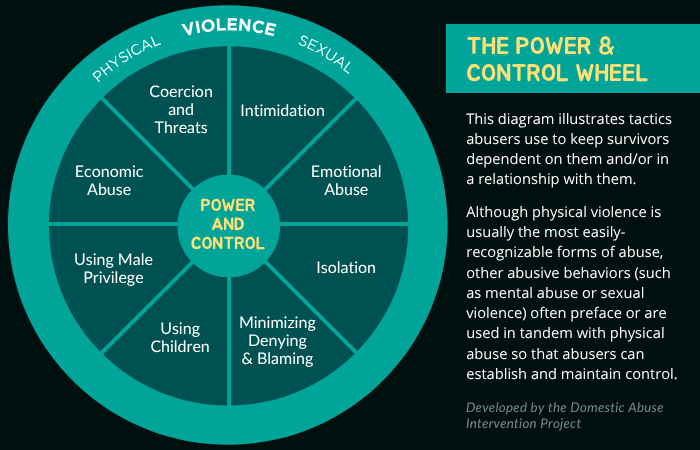
As illustrated in the graphic above, abusers in relationships or in close-proximity with survivors use a variety of manipulation tactics to establish and maintain their power and control. Being isolated from friends, family, and their community can make it even more difficult for survivors to reach out and ask for help, so if you are worried about someone, keep an eye out and make sure to check in on them. Offering an open line of communication lets them know you care and want to be there for them, and even if they aren't ready to talk about their experiences, they know you are a part of their support network and someone they can rely on. Check out RAINN's list of resources for allies and survivors.
How YWCA Supports Survivors
Sexual assault is one of many forms of gender-based violence that YWCA addresses, and our Gender-Based Violence Specialized Services (GBVSS) programs provide survivors with resources that include safety planning, weekly support groups, legal services for victim-defendants, short-term rapid rehousing for survivors and families, sexual assault advocacy, and more. Our individualized services are available to all survivors of gender-based violence, especially those who are furthest from opportunity; particularly Black women.
"Survivors often come to us having experienced many types of violence—domestic violence, sexual assault, commercial sexual exploitation, gun violence, and institutional violence. We meet them with a strong trauma-informed, culturally specific, survivor-centered approach. Our advocacy cannot be a 'one size fits all' approach; we must meet them where they're at in their journey."
– Doris O'Neal, Associate Director of Legal Advocacy & Outreach
Doris O'Neal, Associate Director of Legal Advocacy & Outreach, says she's seen survivors from all walks of life come to YWCA, and our GBVSS team tries to make every single one of these survivors feel welcomed and listened to. Commercial Sexual Exploitation Advocacy Program Manager Nature Carter says great listening skills are vital in their line of work, and it's something they emphasize a lot in the GBVSS department, especially with advocates who work one-on-one with survivors.
Doris O'Neal, as featured in our Survivors FIRST video.
Despite how BIPOC women disproportionately experience sexual assault, only a small percentage of survivors report it. Doris and Nature understand how concerns about safety and privacy can prevent survivors from reaching out to ask for help, and they incorporate that understanding into the care they deliver.
"When a survivor enters into our services after years of instability, exploitation, and unsafe housing, at intake, that trust is so low in systems [because of] the way that they have been treated. Especially our Black, brown, and non-English speaking [survivors], and also our trans population. Folks have felt harmed rather than supported, and those systems are not built on the infrastructure to work with our most marginalized communities."
- Nature Carter, Commercial Sexual Exploitation (CSE) Advocacy Program Manager
In addition to the culturally responsive advocacy and harm reduction support YWCA offers, Doris and Nature explain how YWCA's GBVSS department works hard to earn that trust back: it's relational rather than transactional. What's the difference? Nature says it's a matter of being there for survivors—whether that means showing up at a hotel in the middle of the night to help them get somewhere safe to sleep or taking them away from a triggering situation to sit down and have a cup of coffee or tea, it's about listening, being present, being reliable, and speaking person to person. "These relationships [are] based on not what was given, but the support and the care that was provided, rather than a rushed timeline," says Nature. It's not about serving clients; it's about serving people. "We have to think outside the box, we have to be visionaries in the way that we deliver services. It can't just be the norm; we need to meet folks where we're at."
Survivors all have different needs; sometimes that need is a bag of food, sometimes it's gift cards, sometimes it's hair products, sometimes its hotel vouchers, but regardless of what that need is, those resources come with trauma-informed care and additional supportive services. No matter what a person's background is, they can expect equitable, consistent, and high-quality care from YWCA.
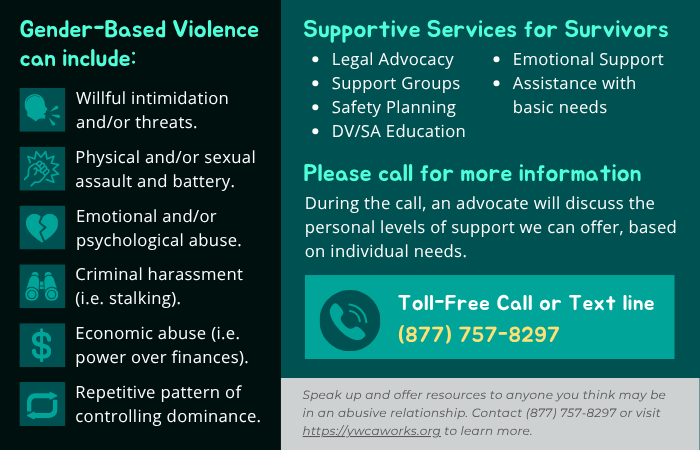
If you or someone you know is being abused, please call our Gender-Based Violence Specialized Services' toll-free call & text line at: 877.757.8297. For additional information about our gender-based violence specialized services, please visit our GBVSS page.

Ana Rodriguez-Knutsen is the Content Specialist for YWCA's Marketing & Communications team. From fiction writing to advocacy, Ana works with an intersectional mindset to uplift and amplify the voices of underrepresented communities.
We share the stories of our program participants, programs, and staff, as well as news about the agency and what’s happening in our King and Snohomish community.
